




Combined Rotary and Lifting Stage


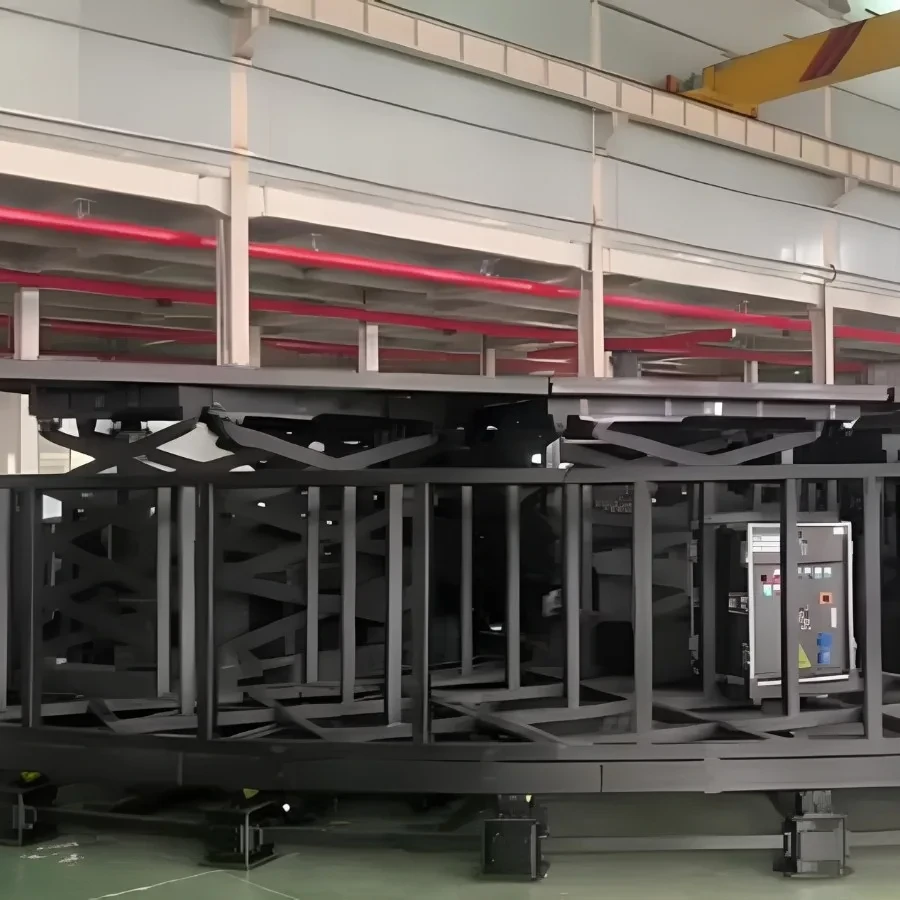
A rotary stage combined with programmable stage lifts is a motion-based mechanical solution for theatrical and live-event stages, enabling simultaneous 360° rotation and independent vertical lifting across multiple areas of the same stage platform. The system can be configured with a modular rotary stage ranging from approximately Ø4–18 m, with a reference rotational speed of 1–6 rpm, combined with multiple stage-lift modules that can be customized in terms of dimensions, stroke, working load and speed.
Through a PLC-based control system, position, speed, acceleration, timing, cues and timecode can be programmed to coordinate multiple movements according to the stage show sequence. This solution is suitable for concerts, game shows, festivals and large-scale productions requiring continuous scene transitions, elevation changes and real-time spatial reconfiguration during performances.
Combined 360° Rotation and Independent Vertical Lifting
| ROTATIONAL MOTION | LIFTING MOTION | CONTROL |
|---|---|---|
| Ø4–18 m · 1–6 rpm | Multiple independent lift modules | Cue · Position · Speed · Timecode |
Key Value: A single stage system can simultaneously rotate the overall stage while changing the elevation of individual areas, enabling continuous scene transitions without interrupting the performance.
What Is a Rotary Stage Combined with Programmable Stage Lifts?
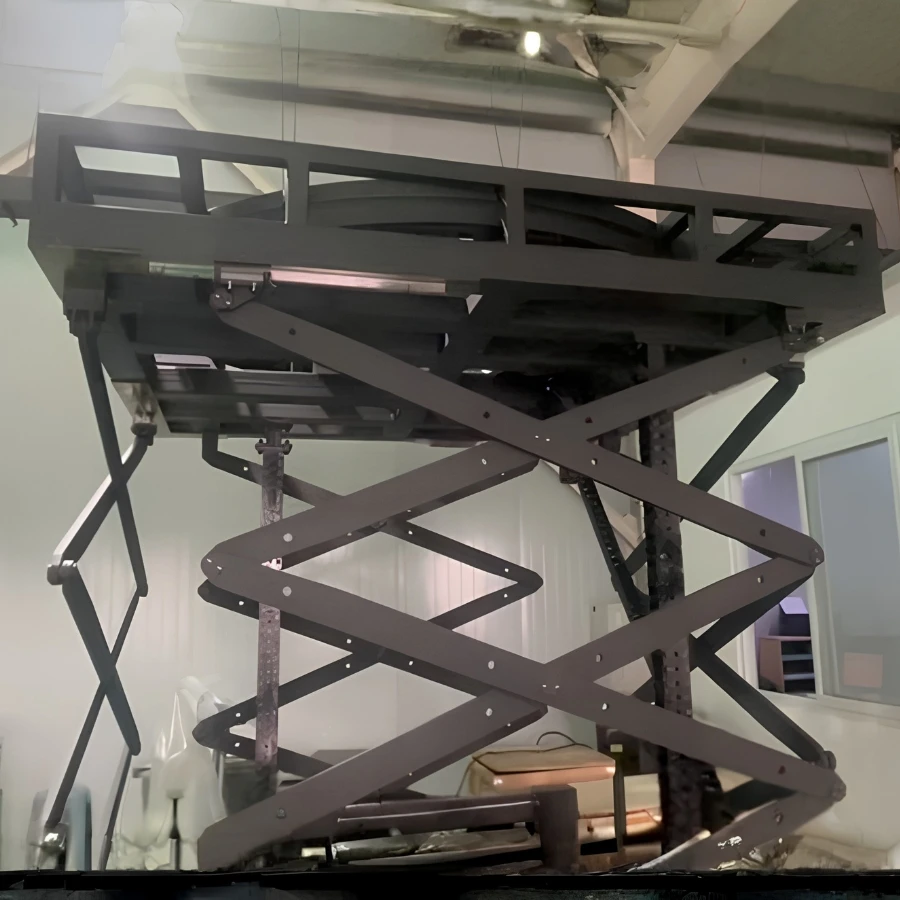
Combining a rotary stage with programmable stage lifts introduces a new level of flexibility to motion-stage design. The modular rotary stage can be configured from approximately 4 m to 18 m in diameter, using multiple coordinated 2 HP motors with an adjustable rotational speed of approximately 1–6 rpm. Within the circular structure, multiple programmable stage-lift modules can be arranged as independent zones, allowing performers, props or sections of the scenery to move vertically while the entire stage continues to rotate.
Each stage-lift module can be customized according to project requirements, including its shape, platform dimensions, lifting stroke, working load, operating speed and number of drive points. The motion-control system can program target position, speed, acceleration, timing, cue and timecode, allowing the lift modules to coordinate with the rotary movement according to a unified show sequence.
The working load of each lift module is calculated after deducting the self-weight of the moving structure. Eccentric loads, dynamic factors and safety margins must also be taken into consideration.
This configuration creates a 360° stage effect, continuous scene transitions and real-time elevation changes during a performance. The director can raise a singer from below the stage, rotate the band toward the audience, reposition props or create multiple spatial layers without interrupting the show. This configuration is suitable for concerts, game shows, festivals and large-scale stages requiring complex motion capabilities.
Technical Data – Modular Rotary Stage
| Specification | Technical Data | Notes |
|---|---|---|
| System type | Modular rotary stage | Reconfigurable according to project requirements |
| Diameter | Approximately Ø4 m to Ø18 m | Final dimensions determined by venue layout and load requirements |
| Structure | Fan-shaped modules, radial beams and concentric rings | Demountable for transportation |
| Rotational speed | Approximately 1–6 rpm, adjustable via PLC | 6 rpm is not applicable to every diameter |
| Rotation direction | Clockwise/counterclockwise; 360° rotation according to configuration | Direction changes managed through controlled acceleration/deceleration profiles |
| Control | PLC | Supports cue and show control |
| Surface finish | Plywood, vinyl, carpet or other finishing materials | Selected according to the artistic design |
| Safety | E-stop, speed limits, pinch-point protection and drive monitoring | To be assessed and validated for each project |
Speed Consideration: At Ø18 m, 1 rpm corresponds to an approximate edge speed of 0.94 m/s, while 6 rpm corresponds to approximately 5.65 m/s. Therefore, the maximum rotational speed must be limited according to the stage diameter, load conditions and performer location.
Technical Data – Customized Programmable Stage Lifts
| Specification | Reference Data | Notes |
|---|---|---|
| System name | Customized programmable stage lift | Individually designed for each project |
| Platform shape | Circular, square, rectangular or special shapes | Coordinated with the rotary-stage modules |
| Platform dimensions | Customized according to the stage design | Final dimensions determined by drawings and installation space |
| Lifting stroke | Customized according to the required elevation | Dependent on structural configuration and available technical space |
| WLL | Calculated according to the actual module load | Includes performers, props and concentrated loads |
| Lifting/lowering speed | Programmed and limited according to the application | Smooth motion is prioritized when performers are present |
| Number of lift modules | One or multiple independent modules | Can operate individually or in groups |
| Number of drive points | Designed according to dimensions and load distribution | Ensures synchronized elevation |
| Position feedback | Encoder/position sensor | Monitors elevation and positional deviation |
| Programming | Position, speed, acceleration, timing, cue/timecode | Enables coordination of multiple motion axes |
| Useful load capacity | Lifting capacity after deducting the self-weight of the moving structure | Accounts for eccentric loads and dynamic factors |
| Safety equipment | E-stop, travel limits, anti-drop protection and synchronization monitoring | Final configuration determined through risk assessment |
Load Principle: The WLL (Working Load Limit) of each stage-lift module must be established based on the structural design, number of drive points, self-weight, load position, dynamic loads and applicable safety factors. A single standardized load rating should not be applied to all module sizes.
Conclusion
A rotary stage combined with programmable stage lifts expands the possibilities of motion-stage design by integrating two primary movements: full-stage rotation and independent vertical lifting of individual areas. With a modular structure, customized lift modules and PLC-based control, the system can be engineered according to the specific venue layout, load requirements, lifting stroke, operating speed and motion sequence of each project.
For stable and safe operation, parameters such as rotational speed relative to stage diameter, working load limit (WLL), eccentric loads, dynamic loads, number of drive points, elevation synchronization and protective devices must be calculated and validated according to actual operating conditions. In particular, a fixed rotational speed or load rating should not be applied universally across all configurations.
When properly designed, programmed and controlled according to the required technical specifications, the system can deliver 360° scene transitions, dynamic elevation changes and continuous spatial reconfiguration without interrupting the performance. This makes it a suitable solution for modern stages requiring advanced mechanical motion, automation and show-control synchronization.
-
1 Star
0
-
2 Star
0
-
3 Star
0
-
4 Star
0
-
5 Star
0
Filter by keyword
All
Reviews 5 ★
Reviews 4 ★
Reviews 3 ★
Reviews 2 ★
Reviews 1 ★





No reviews yet.