




Reusing Booths After the Exhibition: Which Components Can Be Reused?


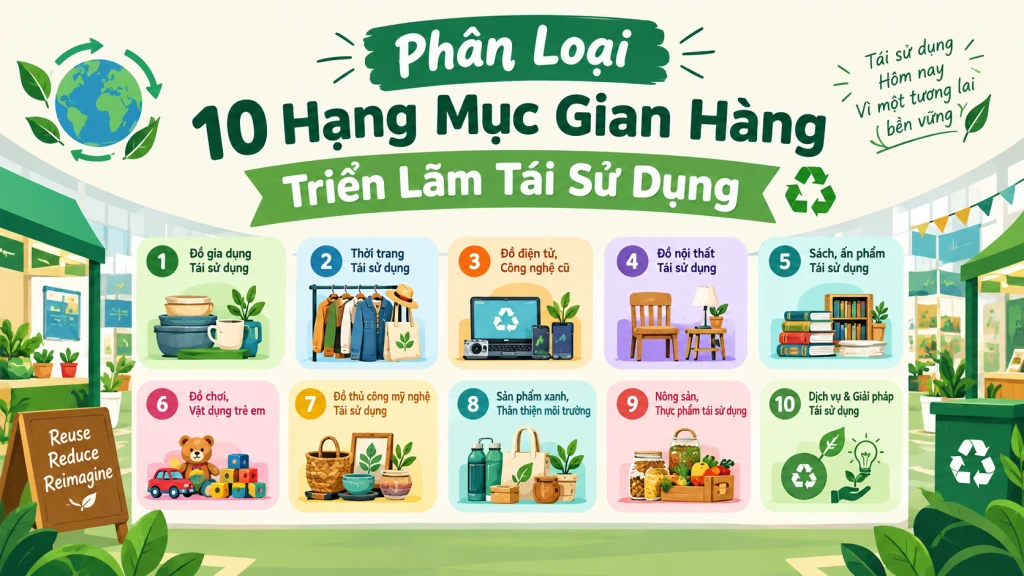
Modular booths allow business owners to reuse up to 95% of structural components and materials after an event. Core items suitable for circular rotation include extruded aluminum frame systems, plug-and-play lighting equipment, and modular flooring. The Better Stands assessment framework requires managers to clearly classify each component group to establish comprehensive, long-term booth storage solutions.

1. Classification of Booth Categories by Actual Reuse Rates
Exhibition booth components offer varying degrees of rotation based on their physical characteristics. Business owners should rely on actual depreciation rates to optimize long-term modular booth construction budgets. Clear categorization ensures installation teams achieve maximum efficiency when recovering materials.
Near-Absolute Reuse Group (95% - 100%)
This material group features superior mechanical durability, capable of being assembled, disassembled, and circulated dozens of times. They serve as the core foundation in reusable exhibition booth design solutions.
- Load-bearing frame systems: High-grade Octanorm and Maxima aluminum extrusions, along with heavy-duty metal truss structures.
- Technology equipment: LED screens, TVs, and track lighting clusters with independent detachable mechanisms.
- Silicone Edge Graphics (SEG) fabric walls: Dye-sublimation printed canvas panels combined with 3D dimensional logos featuring magnetic backings.
Conditional Reuse Group (50% - 80%)
These components remain in good condition if storage procedures adhere to technical standards. Contractors must crate them with thorough shock protection to extend component lifespan.
- Modular rigid wall systems: Engineered wood or PVC panels securely reinforced with aluminum edge trims.
- Reception counters / Display podiums: Require complete encasement in dedicated protective wooden crates to prevent chipped corners.
- SPC modular flooring: Flooring systems typically incur a 5–10% loss at trimmed corners when reinstalled in new layout dimensions.
Restricted Group with High Recovery Costs (< 10%)
Consumable materials with strong adhesive properties typically require considerable budgets to restore. Exhibitors should discard them immediately after the event to save warehouse space.
- Low-cost needle-punch carpet: Surfaces tear easily due to the double-sided securing adhesive tape beneath.
- Printed materials: Decals lose adhesion upon removal, and stapled Hiflex banners frequently tear around the edges.
- Fresh flowers and live plants: Clients should switch to renting from local greenery services to ensure freshness.
2. 10 Core Reusable Items According to the Better Stands Framework
Better Stands is a global initiative launched by Informa Markets to drive sustainable booth practices. This standard categorizes components into 10 items across 3 assessment tiers, from basic to advanced. Companies adopting this benchmark can systematically manage post-exhibition booth storage solutions.
Bronze Tier: Mandatory Baseline Reuse
The entry level requires exhibitors to retain all primary load-bearing structures and ancillary equipment. This delivers the most significant waste reduction right from the very first exhibition.
- Structural frames, partition walls & primary load-bearing raised flooring.
- Plug-and-play lighting systems & all loose furniture.
Silver Tier: Encouraged Spatial Reuse
At this tier, brands must modularize overhead branding and display elements. All components must assemble and disassemble flexibly across various booth dimensions.
- Brand signage (Fascia/Signage) & overhead rigging structures ensuring load safety.
- Modular ceiling systems & product shelving/display facilities.
Gold Tier: Challenging Surface Material Reuse
This is the most stringent tier targeting full material circularity. All decorative surface finishes must be recycled or directly repurposed for the next event.
- Floor coverings (Carpet tiles) in modular, easily removable formats.
- Decorative graphics utilizing interchangeable printed media while retaining external frames.
3. The Golden Rule: Design a System, Not Just a Booth
Industrial designer Dieter Rams once asserted: Good design is long-lasting. This philosophy serves as the guiding foundation for Design for Reuse. Exhibitors invest in an adaptable modular kit to generate multiple standard booth configurations.
For instance, a beMatrix aluminum frame system easily fits an initial 18m² footprint. At larger trade fairs, technicians can seamlessly expand those frames into 27m², 36m², or 54m² layouts. The brand only needs to update surface graphic prints to deliver an entirely fresh aesthetic.
4. Frequently Asked Questions (FAQ)
Below are measurable answers to common inquiries regarding booth warehousing services. This information helps managers optimize their event financial planning.
How much does exhibition booth warehousing typically cost?
Standard warehousing rates are calculated based on the actual cubic volume (m³) or floor area (m²) occupied. According to market benchmarks, this cost remains significantly lower than full-scale new fabrication. Businesses should crate components compactly to minimize rental storage space.
Which materials should strictly not be kept after an exhibition?
Contractors should immediately discard carpets adhered with double-sided tape. Decals pasted directly onto MDF surfaces also generate excessive stripping and cleaning costs. Attempting to salvage these consumable wastes substantially degrades financial efficiency.
Can small-scale booths (under 18m2) apply modular design?
Modular solutions are perfectly tailored for compact booths under 18m². Standardized modular aluminum frames maximize usable display space. This approach delivers a high-end, professional aesthetic even for standard shell schemes.
How can businesses self-assess against the Better Stands standard?
Exhibitors can evaluate their booths against the 10-item checklist tiered across Bronze, Silver, and Gold. In parallel, project owners should review the material specification dossiers provided by construction contractors. Alignment between documentation and physical material volume verifies booth compliance.
Conclusion
Transitioning to reusable exhibition booths yields dual benefits for budgets and brand equity. This approach directly reduces medium-term production expenditures. Concurrently, it establishes a green brand identity aligned with global ESG criteria.
Evaluate your internal storage capabilities today. Please contact us directly for comprehensive consultation, booth fabrication, and turnkey sustainable warehousing quotes. Our expert team is ready to create the most impactful exhibition space for your brand.

-
1 Star
0
-
2 Star
0
-
3 Star
0
-
4 Star
0
-
5 Star
0
Filter by keyword
All
Reviews 5 ★
Reviews 4 ★
Reviews 3 ★
Reviews 2 ★
Reviews 1 ★
Comment List
Related Articles


19/10/2026

77
How Much Does It Cost to Participate in Trade Fairs and Exhibitions in 2026?
Exhibition participation costs in 2026 range from 20 million VND for a standard 9m² booth to hundreds of millions of VND for a custom raw space booth. The financial budget estimate includes space rental rates, booth construction quotations, venue management fees, and accompanying operational expenditures. Marketing Directors must accurately measure each item to ensure the highest return on investment.
19/10/2026
90
Schedule of the 10 Largest Trade Fairs and Exhibitions in Vietnam in 2026
The schedule of Vietnam is largest trade exhibitions in 2026 gathers key B2B events such as Vietnam Expo, Vietbuild, and HawaExpo, hosted at SECC and VEC. This list provides accurate dates and venues, helping manufacturing and import-export enterprises plan booth registration 3 to 6 months in advance. Early preparation ensures brands secure prime display locations and optimize trade show booth construction budgets.
19/10/2026
93
Latest 2026 Schedule of Trade Fairs and Exhibitions in Vietnam (SECC, VEC)
The 2026 Vietnam Exhibition and Trade Fair Schedule compiles comprehensive data on major B2B commercial events held at the SECC and VEC exhibition centers. This summary provides precise event dates, helping businesses proactively plan partner outreach. Mastering these trade promotion milestones provides corporate leadership with a solid foundation to book spaces and plan highly effective 2026 exhibition booth designs.

08/10/2026
187
Why Do Single-Use Booths Generate So Much Waste?
Single-use exhibition booths generate a massive volume of waste due to bonded plywood structures reinforced with nails and glue that must be demolished after just a few days of display. In 2019, Informa Group published data confirming that this raw construction model accounts for up to 80% of total waste at global B2B events. Businesses need to transition to reusable modular booth designs to optimize up to 70% of their budget and fully comply with green ESG standards.
08/10/2026
167
10 Ways to Reduce Single-Use Materials in Booth Construction
Businesses optimize their sustainable exhibition booth construction budgets by applying 10 Better Stands-compliant modular design solutions. The Octanorm aluminum frame system combined with SEG fabric walls and Click-lock SPC flooring helps reduce post-event material waste by up to 70%. This smart assembly solution provides flexible area reconfigurability, maximizing financial efficiency for B2B marketing departments.
08/10/2026
177
Designing Reusable Exhibition Booths: Key Considerations
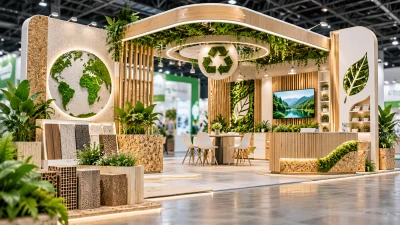
Modular booth design utilizing an aluminum profile framing system combined with tension fabric helps businesses save up to 50% of their budget across multiple exhibitions. This model replaces traditional carpentry with mechanical lock connectors, allowing precise area adjustments from 18m² up to 54m². Below is a detailed analysis of technical specifications and the Total Cost of Ownership (TCO) optimization strategy for brands attending annual trade shows.
05/10/2026
162
Construction of Eco-Friendly Exhibition Booths: Sustainable Materials & Solutions
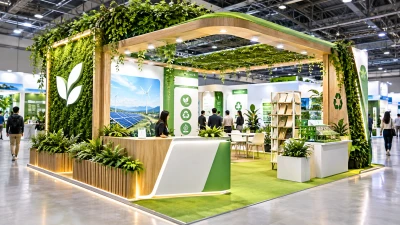
Constructing eco-friendly exhibition booths involves using reusable modular structures to meet Informa Markets Better Stand standards while optimizing event budgets by 40%. This sustainable model combines extruded aluminum alloys with reclaimed wood, creating a sophisticated image for businesses at major venues like the SECC. The information below outlines the material specifications and optimal construction solutions tailored to your brand.
04/10/2026
146
The Trend of Eco-friendly Booths in the Current Exhibition Industry
The "Green Booth" trend of 2026 is emerging as a key shopping solution, focusing on the distribution of high-energy-efficiency appliances and ESG-compliant products. This eco-friendly model enables households to directly cut electricity costs by 40% while creating market expansion opportunities for sustainable manufacturers.

07/10/2026
160
What Is ESG? A Guide to Corporate Green Transition 2026
The "green booth" is a design solution that utilizes 100% recycled materials combined with energy-efficient equipment. This model enables businesses to cut operating costs by 30% while fully meeting international ESG standards. Commercial corporations are increasingly shifting toward eco-friendly exhibition structures to boost their competitive advantage. The trend toward sustainable consumption is reshaping the entire modern retail ecosystem. Green marketing strategies implemented through physical spaces help brands build solid trust with investment partners. The following article analyzes four core reasons driving business owners to aggressively invest in green booth designs.
04/10/2026
142
Why Do Businesses Prioritize Investing in Green Booths?
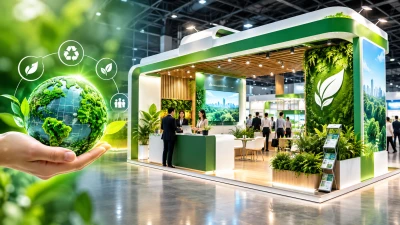
The "green booth" is a design solution that utilizes 100% recycled materials combined with energy-efficient equipment. This model enables businesses to cut operating costs by 30% while fully meeting international ESG standards. Commercial corporations are increasingly shifting toward eco-friendly exhibition structures to boost their competitive advantage. The trend toward sustainable consumption is reshaping the entire modern retail ecosystem. Green marketing strategies implemented through physical spaces help brands build solid trust with investment partners. The following article analyzes four core reasons driving business owners to aggressively invest in green booth designs.


No reviews yet.