




Designing Reusable Exhibition Booths: Key Considerations


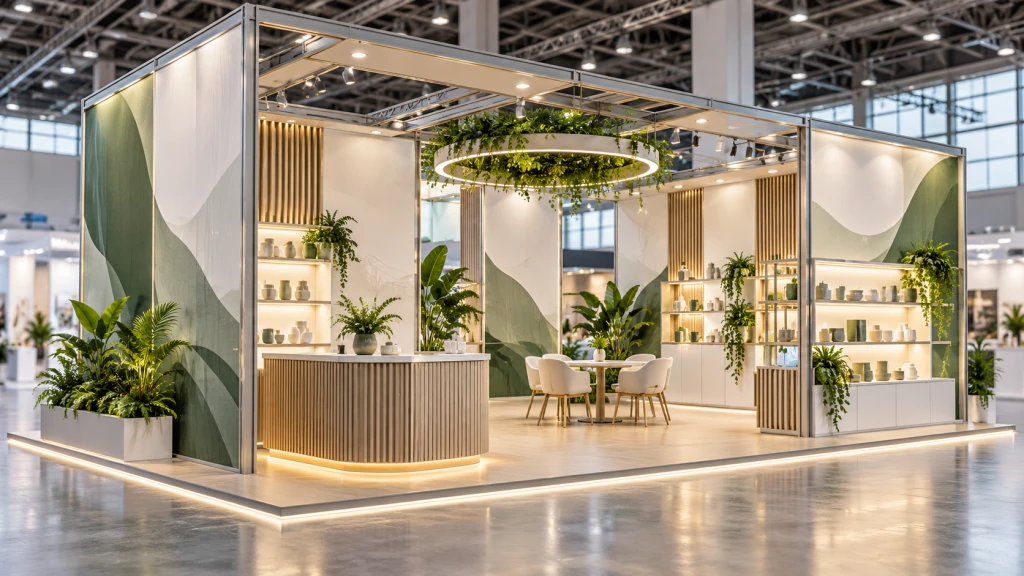
Modular booth design utilizing an aluminum profile framing system combined with tension fabric helps businesses save up to 50% of their budget across multiple exhibitions. This model replaces traditional carpentry with mechanical lock connectors, allowing precise area adjustments from 18m² up to 54m². Below is a detailed analysis of technical specifications and the Total Cost of Ownership (TCO) optimization strategy for brands attending annual trade shows.

1. Core Principle: Design with a Modular System from Day One
The modular system determines the booth's adaptability to various exhibition footprints. This approach divides the space into independent, precisely measured standard units. As a result, technicians can effortlessly dismantle and reassemble the booth in compliance with each event organizer's regulations.
Avoid Static Designs Built for a Single Floor Plan
Technical drawings must anticipate scenarios for scaling up or down from 18m² to 36m² or 54m². Engineers utilize standard modules sized 1x3m or 3x3m for flexible assembly across diverse booth spaces. This solution shields businesses from wasteful expenses when changing booth locations at SECC.
Clearly Separate Structural Elements from Branding Elements
Eco-booth design completely separates load-bearing structural frames from surface visual graphics. The framework, LED lighting system, and raised flooring form a fixed foundation used over multiple years. Graphic posters and logo signage, which belong to the branding elements, can be easily updated for each marketing campaign.
2. Sustainable Material Selection & Connection Methods
The lifespan of a modular booth depends directly on component types and assembly mechanisms. Sustainability is measured by the number of component reuse cycles rather than superficial eco-friendly labeling. A standard-compliant system must withstand significant impact across multiple rounds of transportation.
Prioritize Aluminum Profiles and Tension Fabric
Aluminum profiles combined with tension fabric deliver outstanding mechanical durability across 50 assembly cycles. Painted MDF panels or plasterboard often crack and break during the very first dismantling. The Silicone Edge Graphic (SEG) fabric solution displays crisp visuals and allows for compact, hassle-free folding.
Non-Destructive Assembly & Disassembly Rules
The construction of reusable booths strictly eliminates rivets and silicone glue. The technical team applies latches, mechanical locking clamps, and magnetic connectors to join partition walls. This approach keeps component surfaces completely intact, returning the booth to a safe storage condition.
3. Logistics Optimization: Transportation & Warehousing (Vital Factors)
Event logistics management plays a decisive role in protecting assets after trade shows conclude. Packaging and storage phases must be calculated systematically directly on technical drawings. Scientific warehousing standards help reduce physical collision damage rates by up to 30%.
Custom Flight Case Design
Aluminum components and LED fixtures must fit neatly inside flight cases equipped with heavy-duty casters. Case dimensions are engineered to be fully compatible with standard truck beds and freight elevator doors. Custom-molded foam inserts secure every aluminum profile firmly and safely in place.
Establish Asset Profiles for Components
Each modular partition must feature a unique identification barcode accompanied by detailed positioning schematics. Project managers track maintenance history and inventory levels directly through digital software. This data system shortens material staging time for subsequent exhibition events.
4. Economic Efficiency & User Experience (TCO & UX)
Investing in reusable booth design is a financial calculation delivering clear ROI. Businesses need to evaluate budgets based on total lifecycle utilization rather than short-term construction costs. The right approach saves budget while elevating the end-user experience.
Total Cost of Ownership (TCO) Lifecycle Calculation
The Total Cost of Ownership (TCO) metric amortizes the initial production budget across three to five trade shows. While modular booth quotes are approximately 20% higher than traditional wooden booths initially, savings of up to 50% on production costs become clearly visible from the third event onwards.
Beware of Greenwashing
Merely placing potted plants or using green color schemes does not constitute a true eco-booth design. The essence of sustainability lies in minimizing solid waste volume and enabling space reconfigurability. Brands should demonstrate their commitment to sustainable development through verifiable material lifecycle rates.
5. Quick 10-Step Checklist Before Finalizing Design
Before signing contract approvals, project management must thoroughly review technical measurement parameters. The criteria below help businesses accurately assess contractor capabilities. Rigorous cross-checking prevents the risk of unforeseen budget overruns.
The review team conducts assessments based on the following 10 criteria:
- Drawings clearly break down modular units for each partition wall.
- Structural frames disassemble flexibly using standard mechanical locks.
- Tension fabric graphic layers detach effortlessly.
- The design accommodates at least three different floor size scenarios.
- Traffic flow optimizes reception and display areas.
- Component heat resistance meets fire safety and prevention standards.
- Material specifications completely eliminate painted MDF wood.
- Packaging uniformly uses heavy-duty flight cases.
- Asset tracking barcodes for every individual component are fully transparent.
- A TCO calculation sheet verifies long-term cost optimization efficiency.
6. Frequently Asked Questions (FAQs) About Modular Reusable Booths
Management often scrutinizes technical parameters before shifting their exhibition approach. Below are precise metrics to help businesses plan their trade show strategy. This knowledge base empowers leadership to make informed decisions swiftly.
Is building a reusable (modular) booth more expensive than a single-use booth?
The initial investment for a modular system is roughly 15% to 20% higher than traditional carpentry fabrication. This cost variance disappears by the second trade show as businesses reuse the entire framework. Modular booth investment proves its long-term profitability through verifiable metrics.
How can brand identity be updated for subsequent exhibitions without rebuilding the frame?
Technicians simply insert the silicone beading of the tension fabric into the aluminum profile channels. Businesses print new campaign graphics and install them directly onto the existing frame foundation. The replacement takes under an hour while preserving the partition's complete structural integrity.
How many times can aluminum profiles and modular components be reused?
High-grade aluminum alloy materials retain structural integrity across at least 50 dismantling and transport cycles. The electrostatic powder-coated surface provides exceptional scratch resistance when packed in flight cases. Many reputable contractors provide framework warranties of up to 5 operational years.
How long does on-site construction and installation take for a modular booth compared to a wooden booth?
Mechanical lock connectors reduce on-site assembly time by up to 60%. A technical team can assemble a 36m² space within four to six working hours. This speed significantly outperforms traditional carpentry and sanding processes that generate substantial dust.
Conclusion
The core principle of eco-friendly exhibition spaces lies in designing for long-term lifecycles. Businesses utilizing standardized modular systems gain precise control over costs while minimizing waste generation. This approach reflects the strategic management mindset of industry-leading brands.
Our team of experts is ready to partner with your business to devise the most optimal exhibition strategy. Our engineers provide detailed TCO analyses and 3D renderings reflecting exact build conditions. Contact us today for in-depth consultation on modular reusable booth solutions.

-
1 Star
0
-
2 Star
0
-
3 Star
0
-
4 Star
0
-
5 Star
0
Filter by keyword
All
Reviews 5 ★
Reviews 4 ★
Reviews 3 ★
Reviews 2 ★
Reviews 1 ★
Comment List
Related Articles


19/10/2026

76
How Much Does It Cost to Participate in Trade Fairs and Exhibitions in 2026?
Exhibition participation costs in 2026 range from 20 million VND for a standard 9m² booth to hundreds of millions of VND for a custom raw space booth. The financial budget estimate includes space rental rates, booth construction quotations, venue management fees, and accompanying operational expenditures. Marketing Directors must accurately measure each item to ensure the highest return on investment.
19/10/2026
89
Schedule of the 10 Largest Trade Fairs and Exhibitions in Vietnam in 2026
The schedule of Vietnam is largest trade exhibitions in 2026 gathers key B2B events such as Vietnam Expo, Vietbuild, and HawaExpo, hosted at SECC and VEC. This list provides accurate dates and venues, helping manufacturing and import-export enterprises plan booth registration 3 to 6 months in advance. Early preparation ensures brands secure prime display locations and optimize trade show booth construction budgets.
19/10/2026
92
Latest 2026 Schedule of Trade Fairs and Exhibitions in Vietnam (SECC, VEC)
The 2026 Vietnam Exhibition and Trade Fair Schedule compiles comprehensive data on major B2B commercial events held at the SECC and VEC exhibition centers. This summary provides precise event dates, helping businesses proactively plan partner outreach. Mastering these trade promotion milestones provides corporate leadership with a solid foundation to book spaces and plan highly effective 2026 exhibition booth designs.

08/10/2026
187
Why Do Single-Use Booths Generate So Much Waste?
Single-use exhibition booths generate a massive volume of waste due to bonded plywood structures reinforced with nails and glue that must be demolished after just a few days of display. In 2019, Informa Group published data confirming that this raw construction model accounts for up to 80% of total waste at global B2B events. Businesses need to transition to reusable modular booth designs to optimize up to 70% of their budget and fully comply with green ESG standards.

08/10/2026
167
10 Ways to Reduce Single-Use Materials in Booth Construction
Businesses optimize their sustainable exhibition booth construction budgets by applying 10 Better Stands-compliant modular design solutions. The Octanorm aluminum frame system combined with SEG fabric walls and Click-lock SPC flooring helps reduce post-event material waste by up to 70%. This smart assembly solution provides flexible area reconfigurability, maximizing financial efficiency for B2B marketing departments.

08/10/2026
169
Reusing Booths After the Exhibition: Which Components Can Be Reused?
Modular booths allow business owners to reuse up to 95% of structural components and materials after an event. Core items suitable for circular rotation include extruded aluminum frame systems, plug-and-play lighting equipment, and modular flooring. The Better Stands assessment framework requires managers to clearly classify each component group to establish comprehensive, long-term booth storage solutions.
05/10/2026
161
Construction of Eco-Friendly Exhibition Booths: Sustainable Materials & Solutions
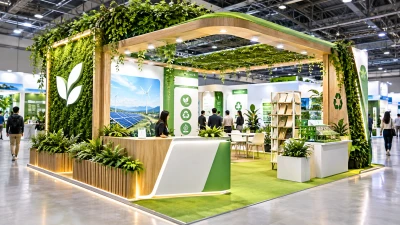
Constructing eco-friendly exhibition booths involves using reusable modular structures to meet Informa Markets Better Stand standards while optimizing event budgets by 40%. This sustainable model combines extruded aluminum alloys with reclaimed wood, creating a sophisticated image for businesses at major venues like the SECC. The information below outlines the material specifications and optimal construction solutions tailored to your brand.
04/10/2026
146
The Trend of Eco-friendly Booths in the Current Exhibition Industry
The "Green Booth" trend of 2026 is emerging as a key shopping solution, focusing on the distribution of high-energy-efficiency appliances and ESG-compliant products. This eco-friendly model enables households to directly cut electricity costs by 40% while creating market expansion opportunities for sustainable manufacturers.

07/10/2026
160
What Is ESG? A Guide to Corporate Green Transition 2026
The "green booth" is a design solution that utilizes 100% recycled materials combined with energy-efficient equipment. This model enables businesses to cut operating costs by 30% while fully meeting international ESG standards. Commercial corporations are increasingly shifting toward eco-friendly exhibition structures to boost their competitive advantage. The trend toward sustainable consumption is reshaping the entire modern retail ecosystem. Green marketing strategies implemented through physical spaces help brands build solid trust with investment partners. The following article analyzes four core reasons driving business owners to aggressively invest in green booth designs.
04/10/2026
142
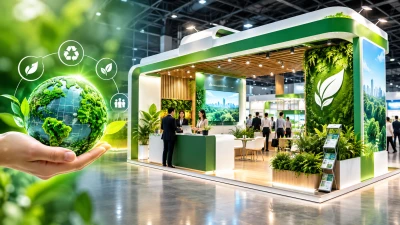
Why Do Businesses Prioritize Investing in Green Booths?
The "green booth" is a design solution that utilizes 100% recycled materials combined with energy-efficient equipment. This model enables businesses to cut operating costs by 30% while fully meeting international ESG standards. Commercial corporations are increasingly shifting toward eco-friendly exhibition structures to boost their competitive advantage. The trend toward sustainable consumption is reshaping the entire modern retail ecosystem. Green marketing strategies implemented through physical spaces help brands build solid trust with investment partners. The following article analyzes four core reasons driving business owners to aggressively invest in green booth designs.


No reviews yet.