




Why Do Single-Use Booths Generate So Much Waste?



Single-use exhibition booths generate a massive volume of waste due to bonded plywood structures reinforced with nails and glue that must be demolished after just a few days of display. In 2019, Informa Group published data confirming that this raw construction model accounts for up to 80% of total waste at global B2B events. Businesses need to transition to reusable modular booth designs to optimize up to 70% of their budget and fully comply with green ESG standards.

An Alarming Reality: Waste from Trade Shows and Exhibitions
Single-use exhibition booths generate over 80% of total event waste, according to a 2019 report by Informa Group. This massive waste problem stems from raw construction materials that degrade after just a few days of display. Such resource depletion is driving B2B businesses to pivot toward sustainable exhibition models.
Disposable stands represent a build method where the entire wall framework is constructed from scratch for a single trade fair campaign. Carpenters utilize fixed plywood or drywall structures tailored to a single floor plan. Once the event concludes, all of these wooden and foam components instantly turn into scrap destined for disposal sites.
5 Reasons Why Single-Use Booths Generate Massive Waste
Short-term material utilization combined with destructive demolition methods directly drives the immense volume of exhibition waste. Fixed structures fastened with nails and glue completely eliminate the possibility of recovering intact components. Let us examine the five measurable causes behind this substantial waste output.
1. Extremely Short Material Lifespans
The lifecycle of a traditionally built booth is fleeting, with its final destination being the waste dump. The standard workflow spans material processing, transportation, installation, and approximately three days of display. As soon as the trade show closes, workers dismantle and discard the entire structure into landfills.
2. Use of Dead Construction Materials That Are Difficult to Recycle
Engineered wood like MDF and MFC combined with glue-treated drywall creates an unrecyclable compound structure that is virtually impossible to separate. Builders apply layers of putty, paint, and decorative adhesive foam firmly onto the substrates. This mixture of materials prevents sorting and ruins any potential for industrial recycling.
3. Time Constraints and Destructive Dismantling Methods
Event organizers typically enforce tight teardown windows of just a few hours. Dismantling crews are forced to use sledgehammers, axes, and power saws to smash structures to meet hand-back deadlines. This brutal destruction reduces intact panels into shattered debris.
4. Bespoke Designs That Make Reintegration Impossible
Custom booth structures are rigidly dimensioned for a single footprint, such as 36 sqm. This rigidity prevents flexible scaling up or down for upcoming events of 18 sqm or 54 sqm. Printed collateral such as hiflex banners or vinyl stickers also lose all usability once the campaign ends.
5. Severe Consequences of Carbon Waste (Embedded Emissions)
Manufacturing and transporting exhibition materials release vast amounts of greenhouse gases, known as a carbon footprint. These embedded emissions are squandered on a single, one-off installation. Embracing sustainable booth construction solutions helps amortize this carbon impact across dozens of events.
The Dual Impact: Wasted Budgets and Lost Competitive Advantage (ESG)
Businesses waste 100% of their new-build construction budget by discarding components after every trade show. This financial investment vanishes completely instead of building reusable warehouse assets for future use. Long-term economics require leadership to immediately implement cost-optimization strategies for recurring event participation.
Indiscriminate waste generation contradicts prevailing global ESG (Environmental, Social, and Governance) standards. Multinational corporations increasingly prioritize partnering with entities that champion sustainable development strategies. Deploying eco-friendly booth systems enhances brand reputation in the eyes of investors.
What Is the Optimal Solution to End the Single-Use Era?
The Better Stands initiative proposes a core philosophy centered on reuse before recycling. Reusable modular booths offer the ideal alternative to traditional wooden fabrication methods. The table below illustrates the practical differences between the two models.
Comparison: Single-Use Booths vs. Reusable Modular Booths
The comparison table below details the efficiency of both event construction options. Businesses can easily observe the clear contrast in environmental friendliness and budget preservation.
| Criteria | Single-Use Booth | Reusable Modular Booth |
| Primary Materials | Raw builds utilize MDF panels, drywall, and styrofoam | Modular aluminum extrusion frames, premium tension fabric |
| Teardown Method | Raw builds require forceful demolition using hammers and axes | Modular systems only require gentle unlatching and unscrewing |
| Waste Volume | Raw builds discard 100% of the structure into landfills | Modular systems minimize waste by reusing the entire framework |
| Customization & Scalability | Raw builds are permanently fixed in shape | Modular designs allow flexible expansion or reduction through block interconnections |
| Investment Cost | Raw builds incur 100% of the cost again for subsequent shows | Modular systems save 50% to 70% of the budget starting from the second show |
Aluminum Frames and Tension Fabric: The Future of the Event Industry
Modular aluminum extrusion structures paired with tension fabric set the benchmark for modern exhibition booth design. Mechanical lock-and-screw systems facilitate rapid assembly and disassembly, packing down compactly for warehousing. Swapping out graphic fabrics is effortless, saving businesses up to 70% of costs for subsequent exhibitions.
Conclusion
Deciding to invest in a modular exhibition booth system delivers dual ecological and economic benefits. Businesses not only enhance their ESG sustainability reporting but also smartly protect long-term working capital. This sustainable design approach outlines an intelligent business strategy for every B2B brand.
Contact our expert team today to receive the most accurate quote for reusable exhibition booth designs. Share your upcoming trade show schedule with us, and we commit to delivering construction solutions that optimize your budget while ensuring top-tier aesthetics.
Frequently Asked Questions (FAQ)
Our experts have compiled detailed answers regarding eco-friendly exhibition booth designs. The quantitative insights below help businesses understand modern B2B event industry standards.
How recyclable are single-use exhibition booths?
Single-use wooden wall structures require extremely complex separation techniques because they are saturated with putty and paint, and firmly bonded with nails and glue. Workers require extensive time to sort materials, making landfills the only viable outcome.
What does the Better Stands standard mean in the exhibition industry?
The Better Stands initiative, launched by Informa Group, aims to encourage the design of reusable exhibition structures. This standard guides the event industry toward a sustainable material ecosystem to protect the global environment.
How much cost can a reusable modular stand save?
A modular booth system helps preserve 50% to 70% of construction budgets starting from the second exhibition. Businesses only need to invest in updating graphic skins while fully reusing the core aluminum framework.
Which materials should be prioritized for eco-friendly booth construction?
Design engineers recommend modular aluminum extrusion frames, premium PVC panels, and tension canvas fabrics. These green materials offer high durability, pack down easily for storage, and can be reconfigured dozens of times.

-
1 Star
0
-
2 Star
0
-
3 Star
0
-
4 Star
0
-
5 Star
0
Filter by keyword
All
Reviews 5 ★
Reviews 4 ★
Reviews 3 ★
Reviews 2 ★
Reviews 1 ★
Comment List
Related Articles


19/10/2026

75
How Much Does It Cost to Participate in Trade Fairs and Exhibitions in 2026?
Exhibition participation costs in 2026 range from 20 million VND for a standard 9m² booth to hundreds of millions of VND for a custom raw space booth. The financial budget estimate includes space rental rates, booth construction quotations, venue management fees, and accompanying operational expenditures. Marketing Directors must accurately measure each item to ensure the highest return on investment.
19/10/2026
89
Schedule of the 10 Largest Trade Fairs and Exhibitions in Vietnam in 2026
The schedule of Vietnam is largest trade exhibitions in 2026 gathers key B2B events such as Vietnam Expo, Vietbuild, and HawaExpo, hosted at SECC and VEC. This list provides accurate dates and venues, helping manufacturing and import-export enterprises plan booth registration 3 to 6 months in advance. Early preparation ensures brands secure prime display locations and optimize trade show booth construction budgets.
19/10/2026
92
Latest 2026 Schedule of Trade Fairs and Exhibitions in Vietnam (SECC, VEC)
The 2026 Vietnam Exhibition and Trade Fair Schedule compiles comprehensive data on major B2B commercial events held at the SECC and VEC exhibition centers. This summary provides precise event dates, helping businesses proactively plan partner outreach. Mastering these trade promotion milestones provides corporate leadership with a solid foundation to book spaces and plan highly effective 2026 exhibition booth designs.

08/10/2026
166
10 Ways to Reduce Single-Use Materials in Booth Construction
Businesses optimize their sustainable exhibition booth construction budgets by applying 10 Better Stands-compliant modular design solutions. The Octanorm aluminum frame system combined with SEG fabric walls and Click-lock SPC flooring helps reduce post-event material waste by up to 70%. This smart assembly solution provides flexible area reconfigurability, maximizing financial efficiency for B2B marketing departments.

08/10/2026
169
Reusing Booths After the Exhibition: Which Components Can Be Reused?
Modular booths allow business owners to reuse up to 95% of structural components and materials after an event. Core items suitable for circular rotation include extruded aluminum frame systems, plug-and-play lighting equipment, and modular flooring. The Better Stands assessment framework requires managers to clearly classify each component group to establish comprehensive, long-term booth storage solutions.
08/10/2026
176
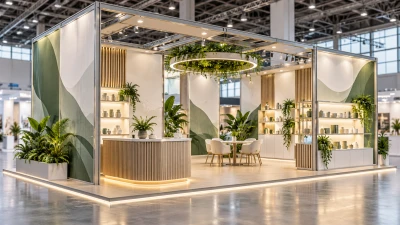
Designing Reusable Exhibition Booths: Key Considerations
Modular booth design utilizing an aluminum profile framing system combined with tension fabric helps businesses save up to 50% of their budget across multiple exhibitions. This model replaces traditional carpentry with mechanical lock connectors, allowing precise area adjustments from 18m² up to 54m². Below is a detailed analysis of technical specifications and the Total Cost of Ownership (TCO) optimization strategy for brands attending annual trade shows.
05/10/2026
161
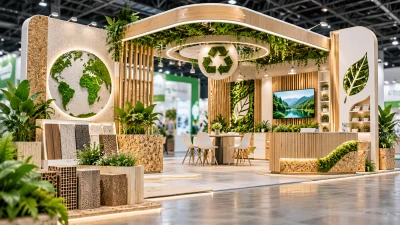
Construction of Eco-Friendly Exhibition Booths: Sustainable Materials & Solutions
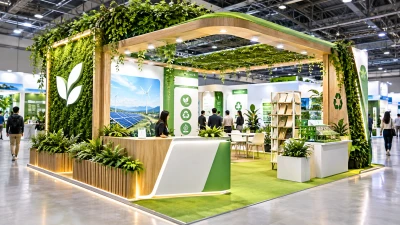
Constructing eco-friendly exhibition booths involves using reusable modular structures to meet Informa Markets Better Stand standards while optimizing event budgets by 40%. This sustainable model combines extruded aluminum alloys with reclaimed wood, creating a sophisticated image for businesses at major venues like the SECC. The information below outlines the material specifications and optimal construction solutions tailored to your brand.
04/10/2026
146
The Trend of Eco-friendly Booths in the Current Exhibition Industry
The "Green Booth" trend of 2026 is emerging as a key shopping solution, focusing on the distribution of high-energy-efficiency appliances and ESG-compliant products. This eco-friendly model enables households to directly cut electricity costs by 40% while creating market expansion opportunities for sustainable manufacturers.

07/10/2026
160
What Is ESG? A Guide to Corporate Green Transition 2026
The "green booth" is a design solution that utilizes 100% recycled materials combined with energy-efficient equipment. This model enables businesses to cut operating costs by 30% while fully meeting international ESG standards. Commercial corporations are increasingly shifting toward eco-friendly exhibition structures to boost their competitive advantage. The trend toward sustainable consumption is reshaping the entire modern retail ecosystem. Green marketing strategies implemented through physical spaces help brands build solid trust with investment partners. The following article analyzes four core reasons driving business owners to aggressively invest in green booth designs.

04/10/2026
142
Why Do Businesses Prioritize Investing in Green Booths?
The "green booth" is a design solution that utilizes 100% recycled materials combined with energy-efficient equipment. This model enables businesses to cut operating costs by 30% while fully meeting international ESG standards. Commercial corporations are increasingly shifting toward eco-friendly exhibition structures to boost their competitive advantage. The trend toward sustainable consumption is reshaping the entire modern retail ecosystem. Green marketing strategies implemented through physical spaces help brands build solid trust with investment partners. The following article analyzes four core reasons driving business owners to aggressively invest in green booth designs.


No reviews yet.